[Curatorial text by Nguyen Minh Ngoc]
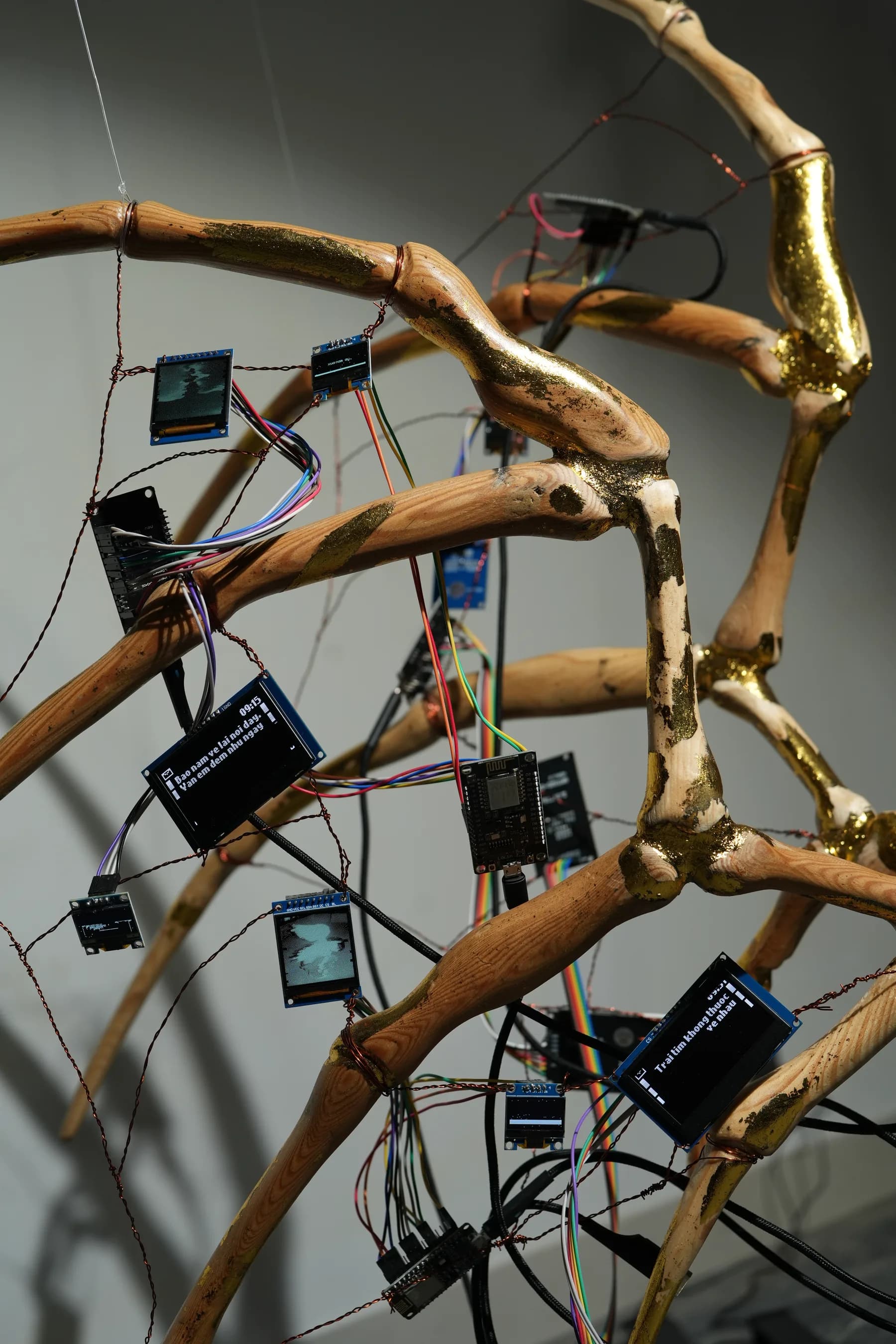
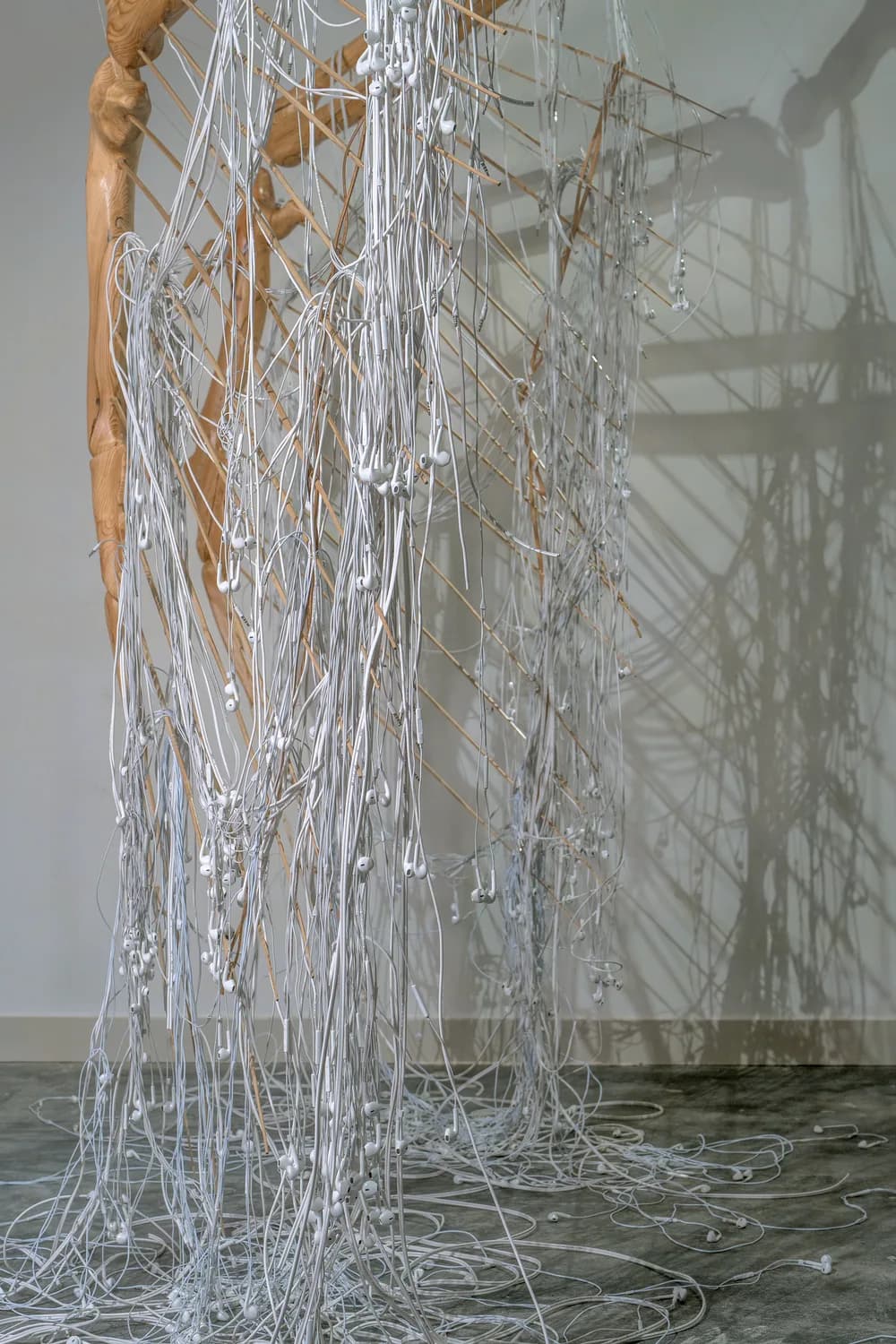
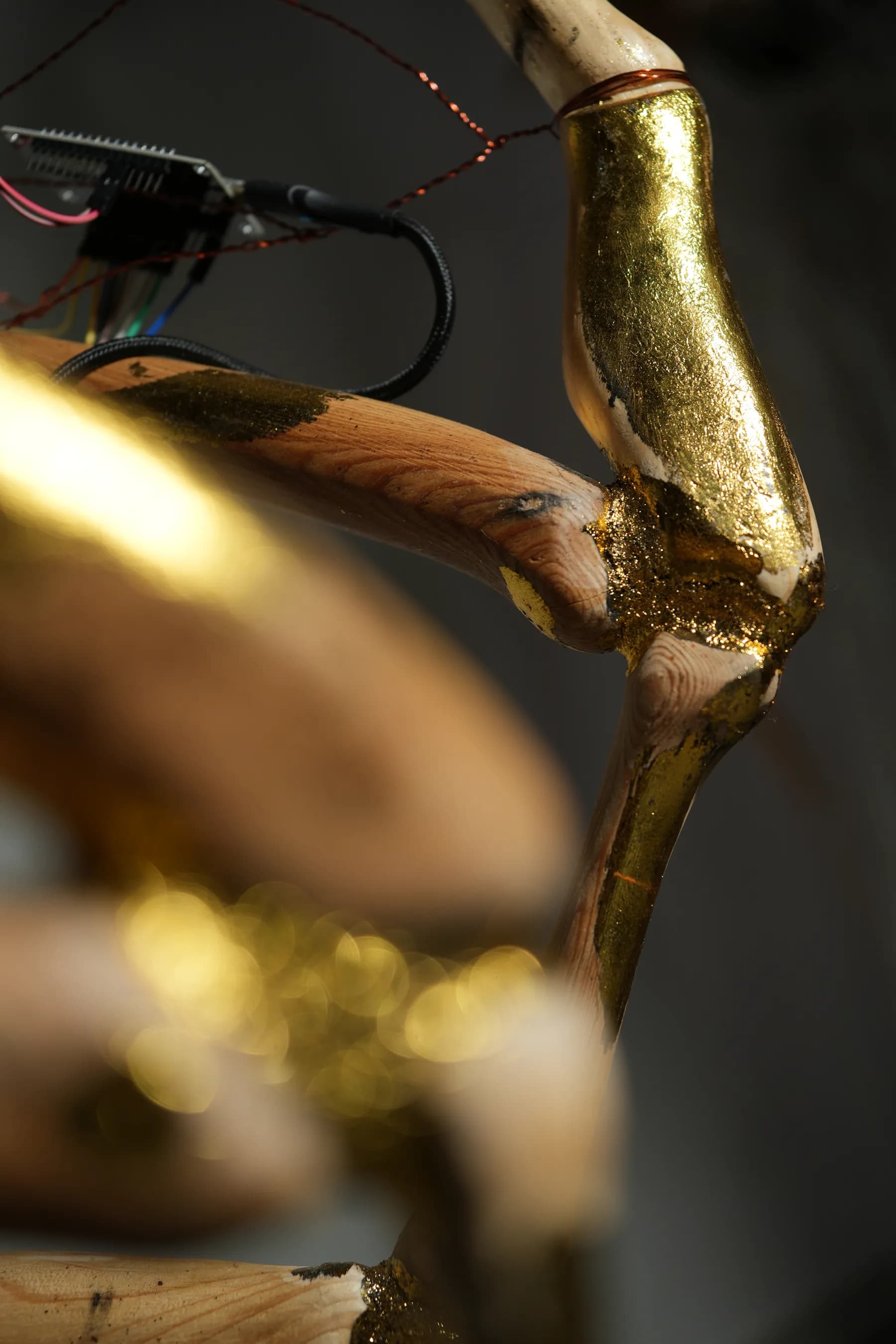
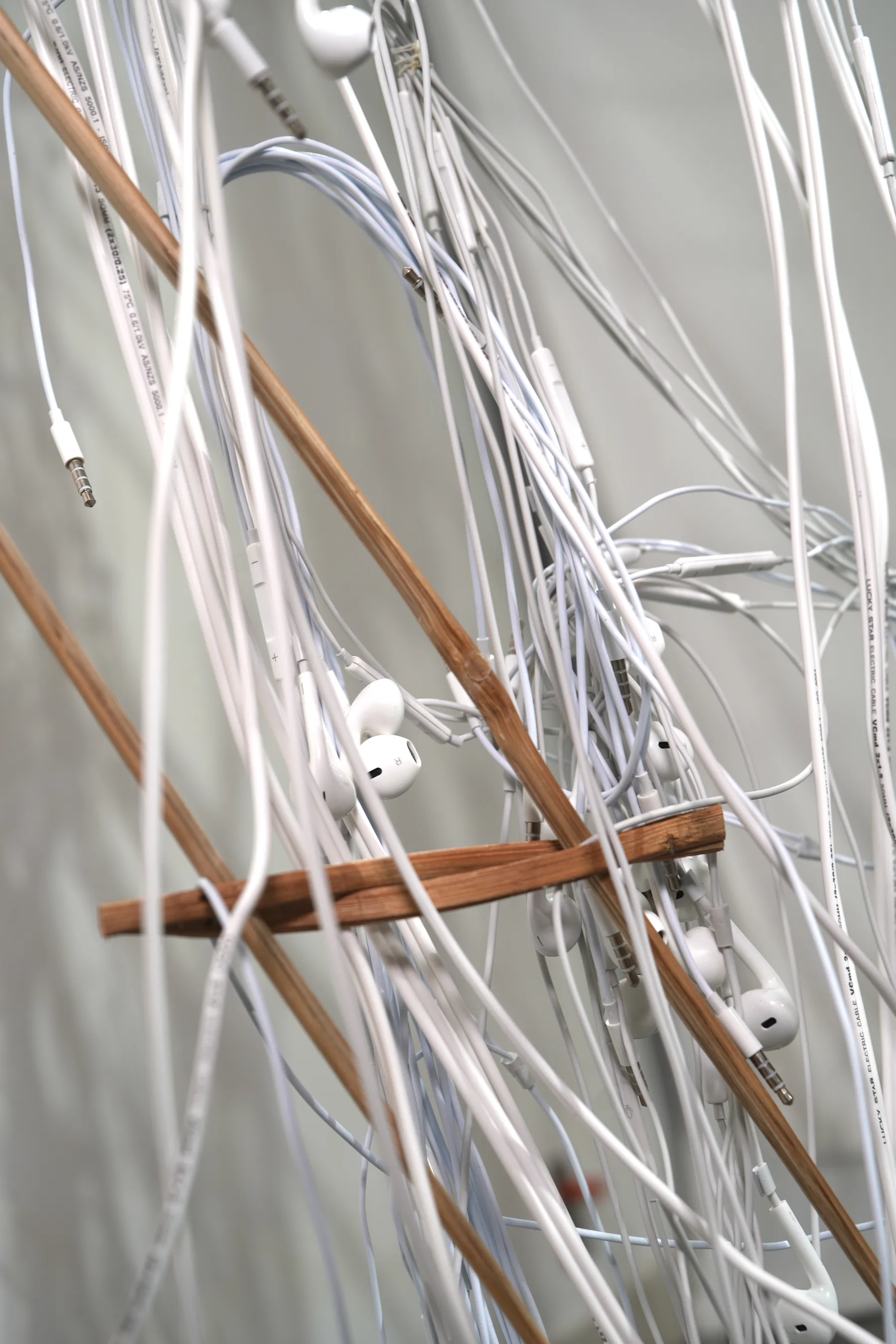
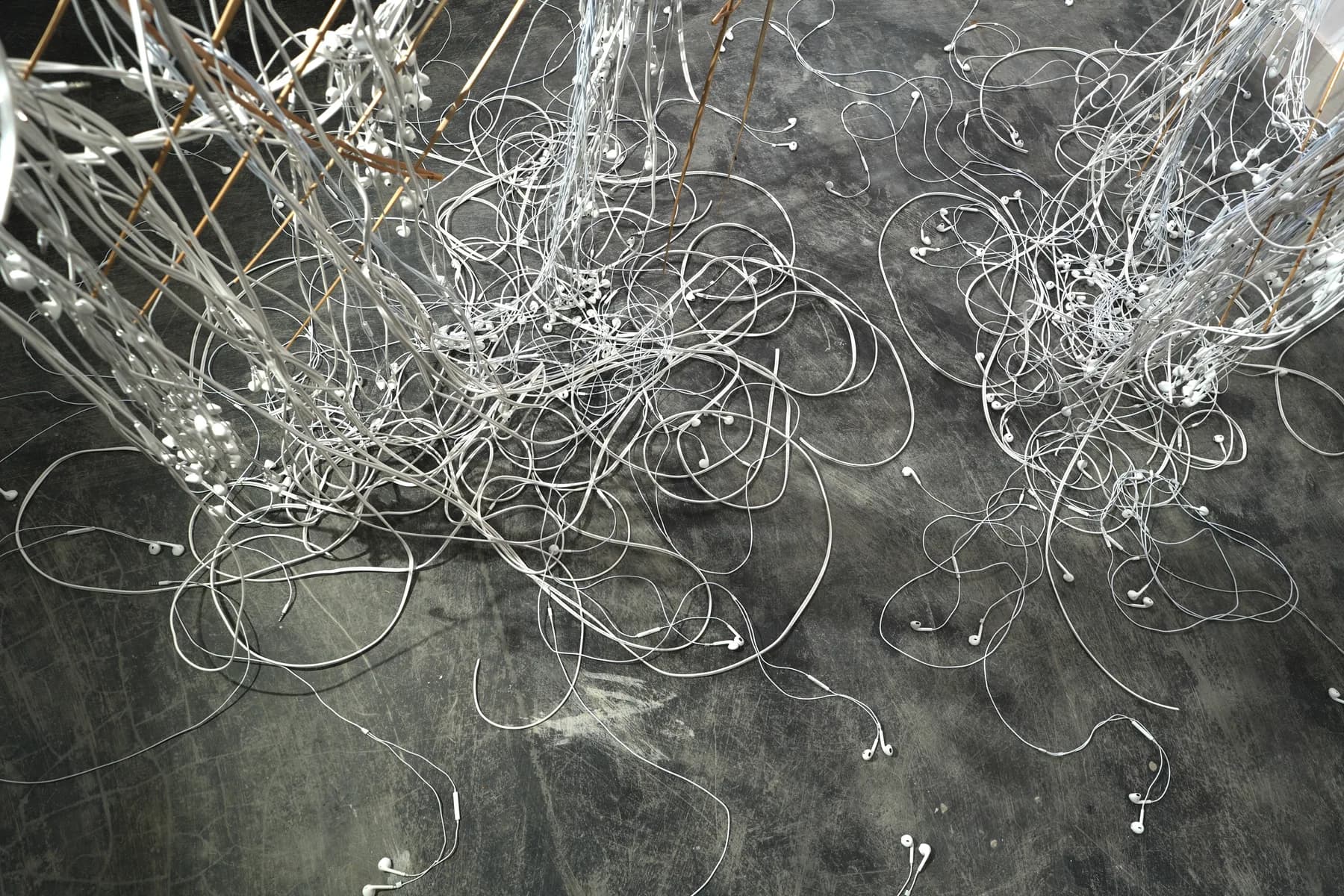
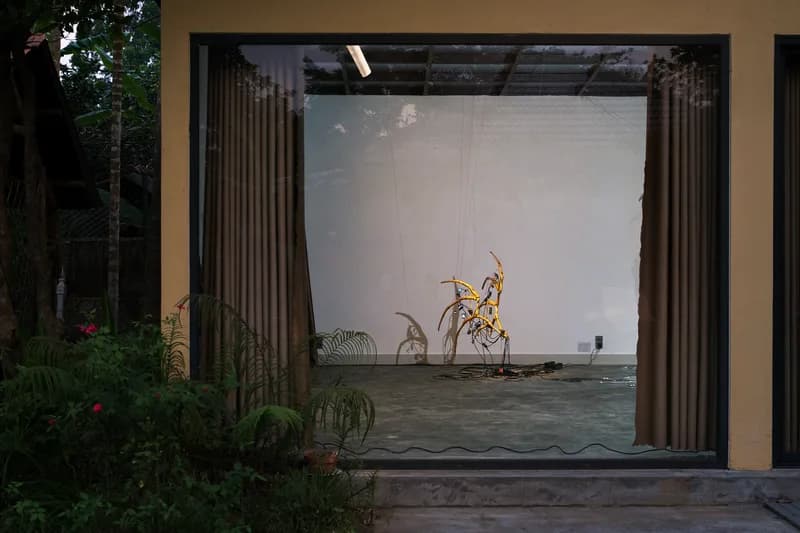
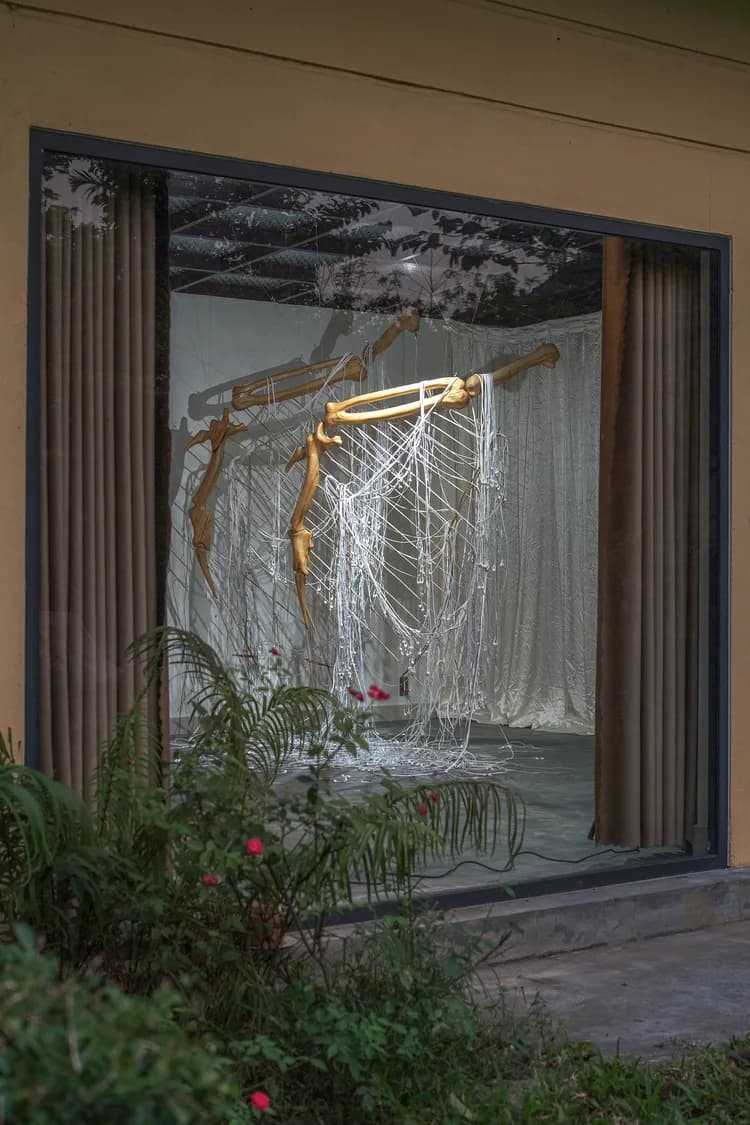
Tucked away in their studio, an open-winged figure, bone bare facing us, hovers just above the floor. Its core wooden structure is pervaded by gold dust and anchored down by a constellation of colorful wires and tiny black screen displaying white texts and images. To the right, facing the other direction and suspended in parallel, a much larger being of a similar sort. Wooden bone bare wings wide spread, though closed off and stooped, carrying matrixes of earphones and white wires. They are in a slow, quiet, lingering movement around each other, barely resembling a dance. I was told this project started out being about a love story.
[Ngoc continues]
These beings carry animal traces - their bird and bat skeletons, but their make up is not of an organic form. It certainly brings up questions about their past. What evolution have the generations of their kind - their species - had? What are they now? What kind of lives have they lived through themselves? What history do they share? And perhaps most importantly, what led them to this moment of separation pregnant with a palpable heavy-heartedness and quiet resolution?
[Read full curatorial text]
An artist feeds on his childhood during all of his life. Upon the traits of the childhood depends the nature of his art.” *
Amusingly but inevitably, as I was watching their work unfold, this Tarkovsky line rings in my ears. Amusing because the duo could not be any further from Tarkovsky when it comes to their outward antics. Inevitable because I find it absurdly accurate.
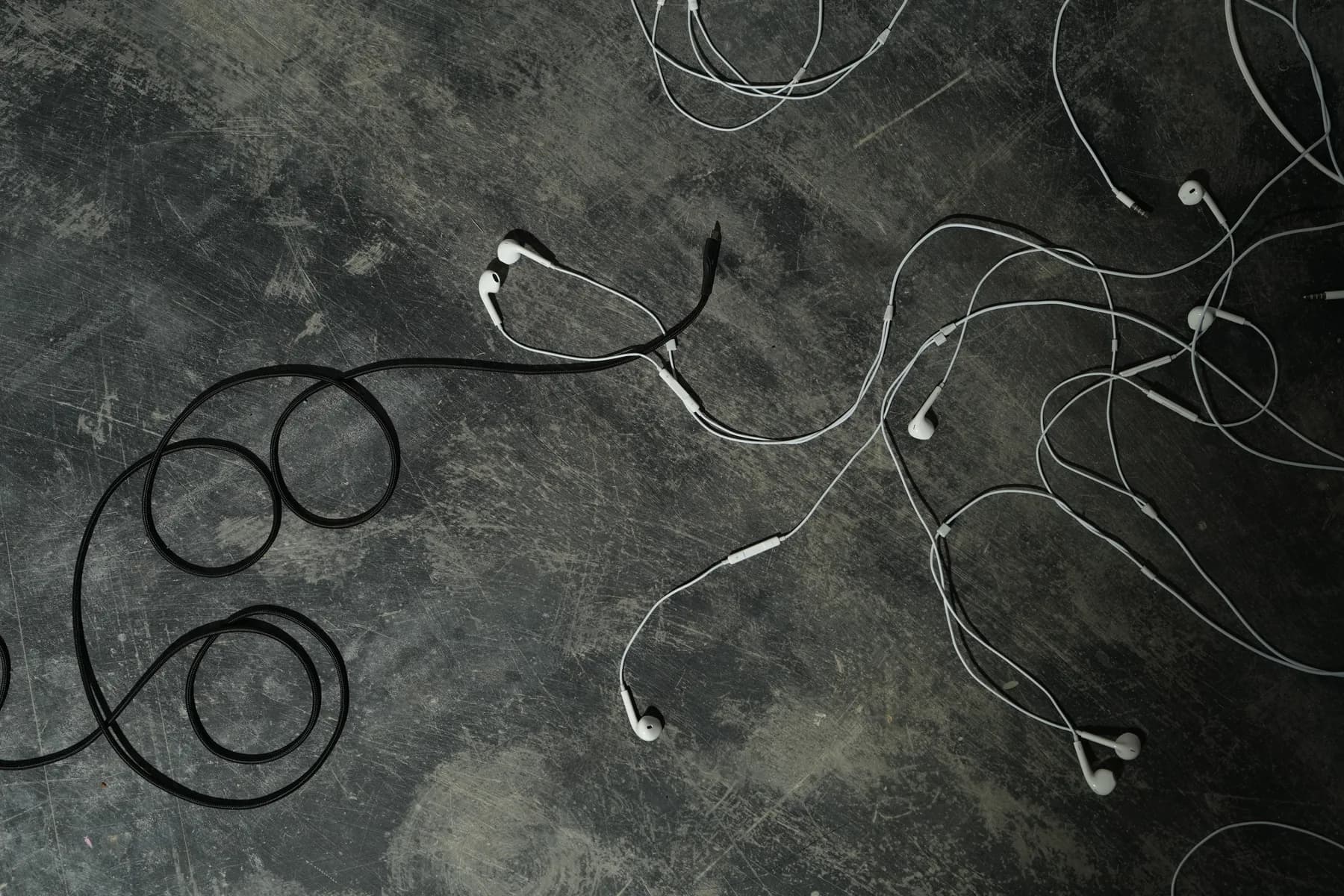
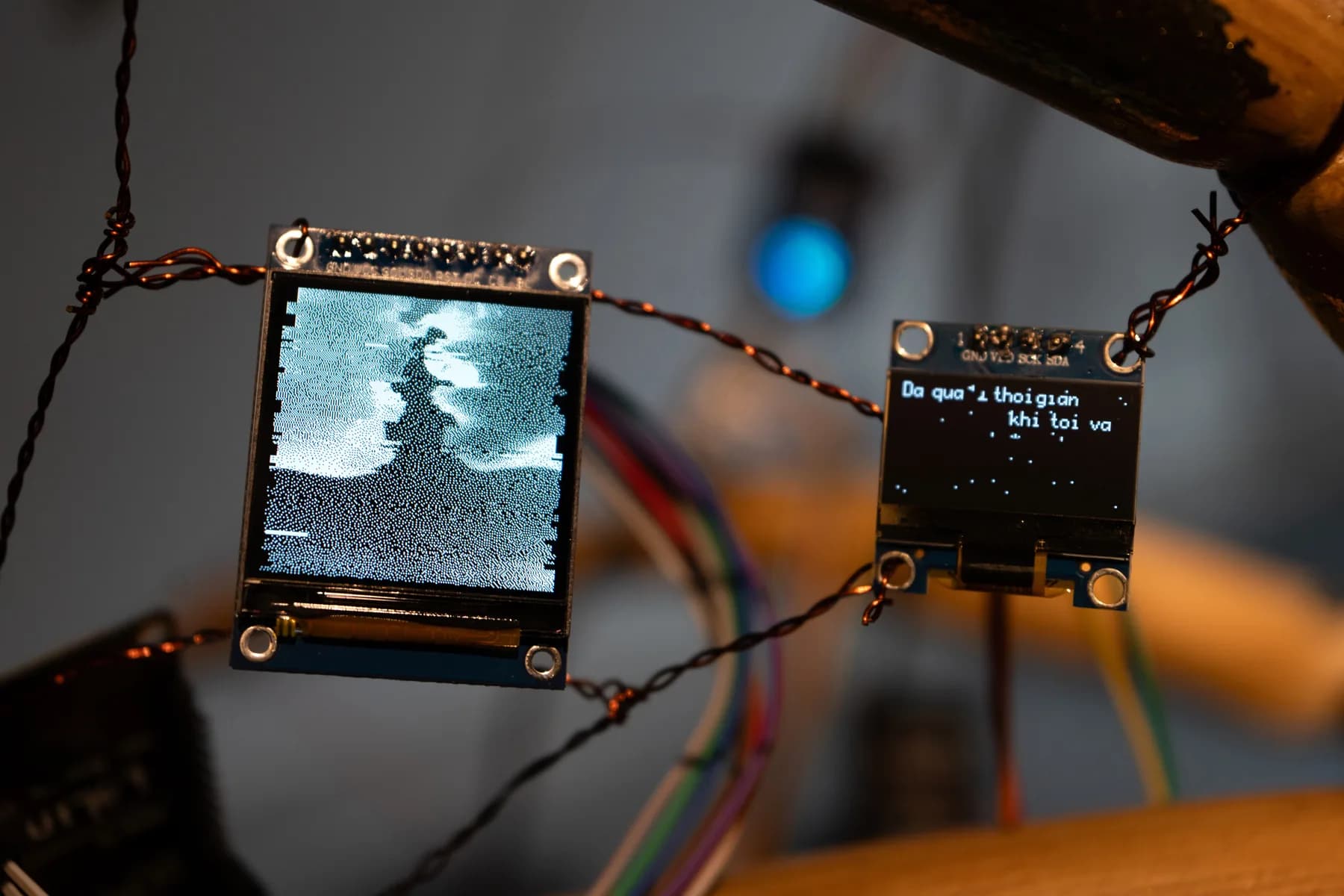
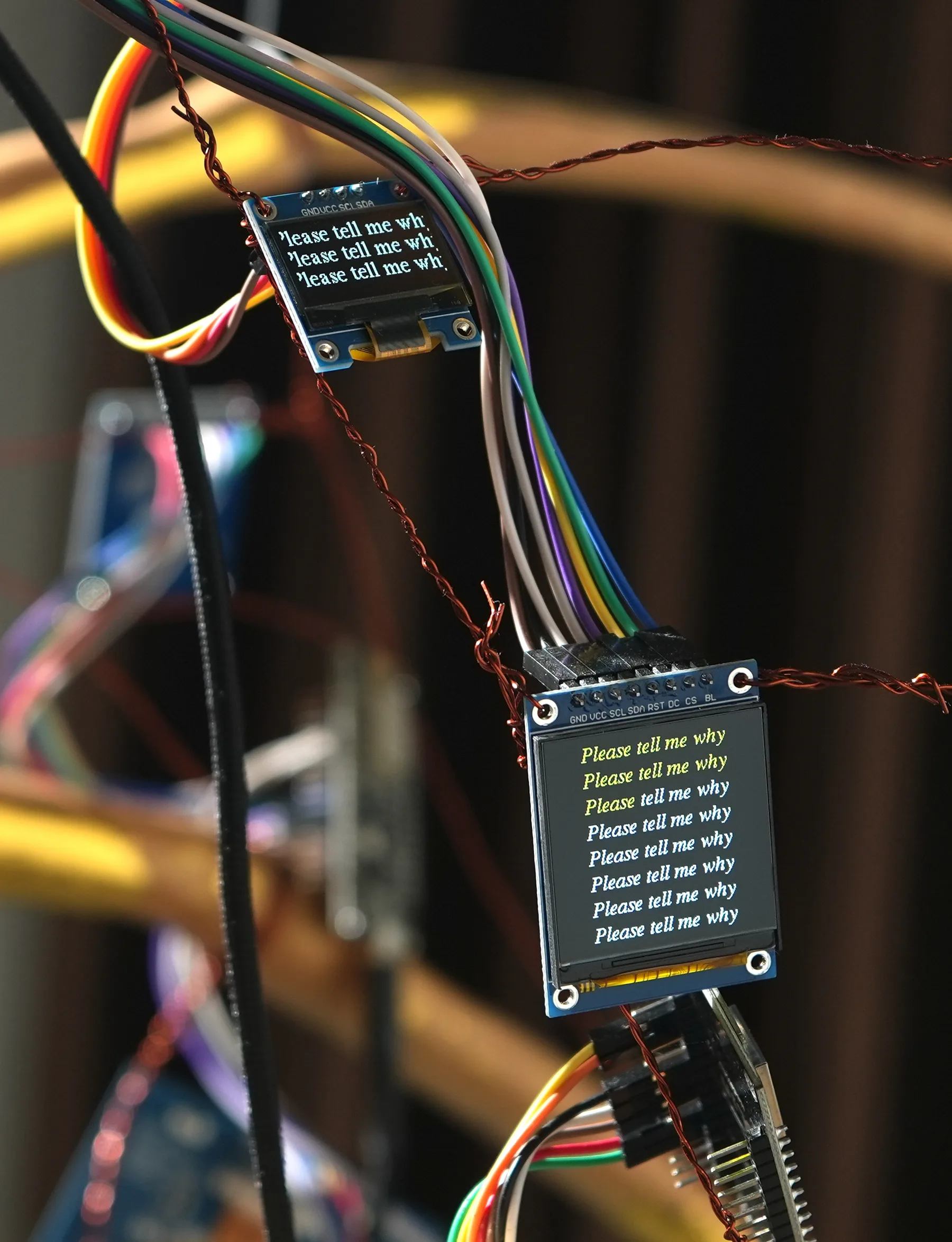
Artifacts of the early 2000s decidedly mark their work - wired earphones, Nokia phone screens, Vietnamese pop love song lyrics, emojis and images of early internet culture. This recollection and reconstruction of distant past fragments bring about a contented undertone. Dreamy and worthy of romanticization was the 1990s childhood that witnessed the transition from an analog to the ever more expansive technological and virtual boom. It is perhaps the last generation that is able to retain some sort of collective memory that is not yet distorted by the speed and scale of a virtual global existence.
Ưng Hoàng Phúc and Lana Del Ray are absolute collective icons of the 2000s and 2010s in Việt Nam and the English speaking sphere, respectively. Contemporary references of figures such as these, however, cannot evade a certain inside joke about their over the top theatricality. The mention and embodiment of these figures are, therefore, a decidedly dialectical gesture - an affirmation of affection: I love you, despite, and precisely because of all of this silliness and stupidity.
Critics of nostalgia are often fueled by the frustration with an inertia caused by the concurrent reminiscence of the past and avoidance of the future. But, this here is not merely a nostalgic stance. It is decidedly a return to and borrows from childhood’s innocence, purity, and fearlessness. It employs humor and whimsy to stay elastic, open - porous, and future-oriented. They suspend the structure of our immediate, bodily reality, that which could often be harsh and burdened by socio-politico-economic codes. In that moment, we (re-)turn to a certain freshness and lightness allowing for dynamism or movement to be unleashed - a cleansing act. Without this, we would not be able to survive modern times.
—We get told time and time again of both the glory and the wretchedness of modernity. Convenient accessibility to goods borders fulfillment of manufactured desires. Global interconnectivity’s collateral is the exploitation of people and nature. Technology serves and, in turn, conditions our living. With great offerings, great ethical demands are made.
As consumers of urban, modern materiality, we sense a deeply veiled perversity. Much of the make up of our lives is not regenerative. To last, things are designed to be smooth and sealed off against external influence. At its roots is a dryness, and our empty exhaustion is the testament to this reality. As stewards of the urban, choosing to work with un-porous materiality, we must acknowledge this. Porosity is more of a trait of life. In time, un-porous things will be made to be porous.
Now, that is the vulnerability that must be accepted, and lived. It is a decision to take responsibility for ourselves and assume this vulnerability of our time. Only this could give us agency. And ultimately, only this agency to act could render us free.
* Quote from the 2019 documentary Andrey Tarkovsky: A Cinema Prayer.